6 mm — Baby metal, fine aggregate
The small chip. On site it is called baby metal. It is still a stone you can see in the hand, not a dust.
Tile laying, fine concrete mixes, mortar, and surface plastering.
Quarry
Blue metal here means crushed granite, supplied to construction sites. Your structural engineer specifies the grade. Where a concrete use is mentioned, treat it as a planning note, not a mix design.
The drawings use one frame. A small size fills it with many pieces. A large size shows only a few. You should be able to tell them apart without reading the label. They are illustrations, not photographs of an SPR stockpile.
The small chip. On site it is called baby metal. It is still a stone you can see in the hand, not a dust.
Tile laying, fine concrete mixes, mortar, and surface plastering.
A medium chip for reinforced concrete where 20 mm will not pass the bars or the cover.
RCC roof slabs, beams, columns, and precast products, when the drawing wants the smaller of the two medium sizes.
The slightly larger partner of 10 mm. Same jobs, a little more body in the mix.
RCC roof slabs, beams, columns, and precast products.
The size most house sites mean when they say jelly. A handful of familiar angular pieces, not a powder and not a boulder.
General concrete, foundations, and structural building. This is the most common size.
A heavy size. Few pieces fill the frame. It is for mass and for the lower layers, not for a congested slab.
Heavy-duty foundations and the lower layers of road construction.
The largest screened size in the usual order. Railway ballast sits with this size. We are not claiming a railway contract — if the job needs 63 mm, say what it is for.
Heavy-duty foundations, the lower layers of a road, and the size people mean by railway ballast.
Raw quarry dust is the fine fraction that comes straight off the crusher. M-Sand is that fine crush after it is processed and graded so it can stand in for river sand. They are not the same product. Ask for the one the specification names.
The fine fraction that comes off the crusher. It looks like a cloud of specks, not like chips. It is useful, and it is not the same product as M-Sand.
Filling, blending, and jobs that specifically ask for crusher dust. Do not assume it can stand in for river sand.
M-Sand starts from that fine crush, then it is graded — and often washed — so it can stand in for river sand in masonry and concrete. The grains are still fine, but more even than raw dust. Ask which one you need. We will not treat them as one product.
A river-sand substitute in masonry and concrete, when the specification calls for manufactured sand rather than raw quarry dust.
Additional supply
4.75 mm chips, boulders for gabion and erosion work, GSB and WMM for road layers, and crusher-run or scalpings for fill. They are listed because sites ask. They are not a promise of a railway contract, a plant capacity, or a certificate.
A chip size between dust and 6 mm baby metal. Included because quarries are asked for it. Say if it should come off the list.
Fine concrete and flooring beds, when 6 mm is still a little coarse.
Large pieces kept back from the fine crush. They are not a concrete size.
Gabion boxes, the toe of a retaining wall, and erosion protection.
A road layer, not a single jelly. GSB is a graded mix of sizes for the sub-base under a road.
The granular sub-base when a road drawing calls for it.
The moist, graded road layer above the sub-base. It is laid wet. It is not a bag of 20 mm jelly.
Wet mix macadam when the road drawing calls for that layer.
The unsized or lightly sized run from the crusher. Fines and larger pieces together. It is not a substitute for screened 20 mm in a structural pour.
Filling, and temporary site roads.
The quarry’s town and street address are not published on this site. The steps below are the plant, in plain order.
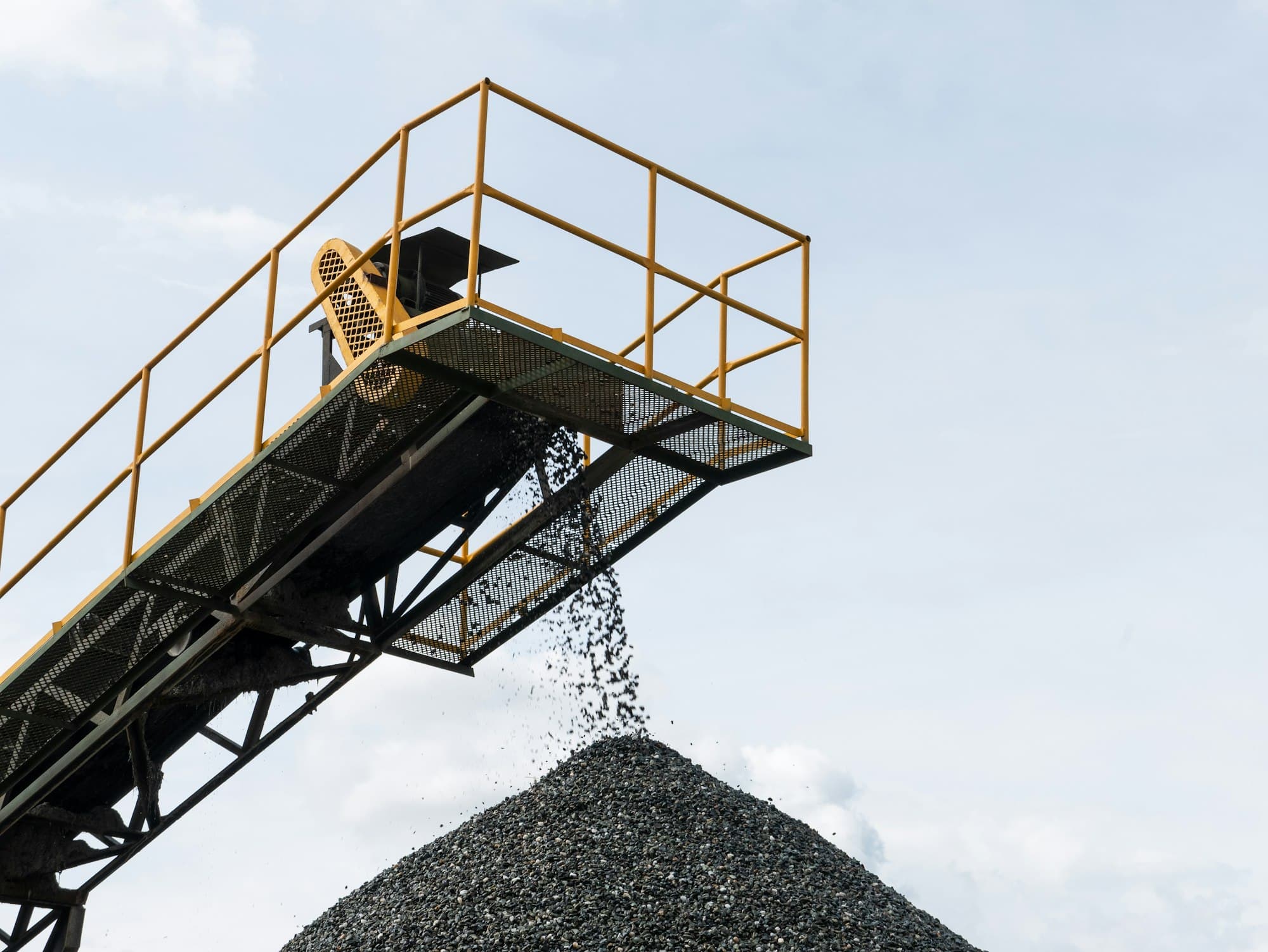
Holes are drilled in the face. A controlled blast breaks the granite into pieces the plant can take. This page does not name the hill, the town, or a street for the quarry.
The blasted rock goes to the jaw first. That break brings it down to a size the next machines can crush.
Cone crushers take it smaller. A VSI — a vertical shaft impactor — throws the stone so more of the chips come out cubical. Your engineer still names the size.
Screens separate the crush. What falls through is not the same product as what stays on top.
Each size has its own heap: 6 mm, 10 mm, 12 mm, 20 mm, 40 mm, and 63 mm. Quarry dust is kept apart from M-Sand.
The tipper is weighed on the way out. The weight on the slip is the weight that was loaded.
A hydraulic tipper carries the stone to the site. The fleet page describes the vehicles, without pretending to know the exact mix.
The site gets a challan for that load, so the site engineer can match it to the weighbridge. This website does not yet send the challan on. That link is listed under the desk, as work still to connect.
6 mm for plaster and tiles. 20 mm for most concrete. 10 or 12 mm where the bars are close. Your engineer names the grade.
A rough quantity is enough to start. Say where the tippers should reach, and when the pour is waiting.
The load is weighed as it leaves. That weight travels with the delivery challan.
SPR stone, on SPR vehicles. Several tippers can be put on one site when the pour needs them.
Planning estimate
This count assumes 16 MT on a tipper. Legal payload depends on the vehicle and the permit.
Enter a quantity in metric tonnes.